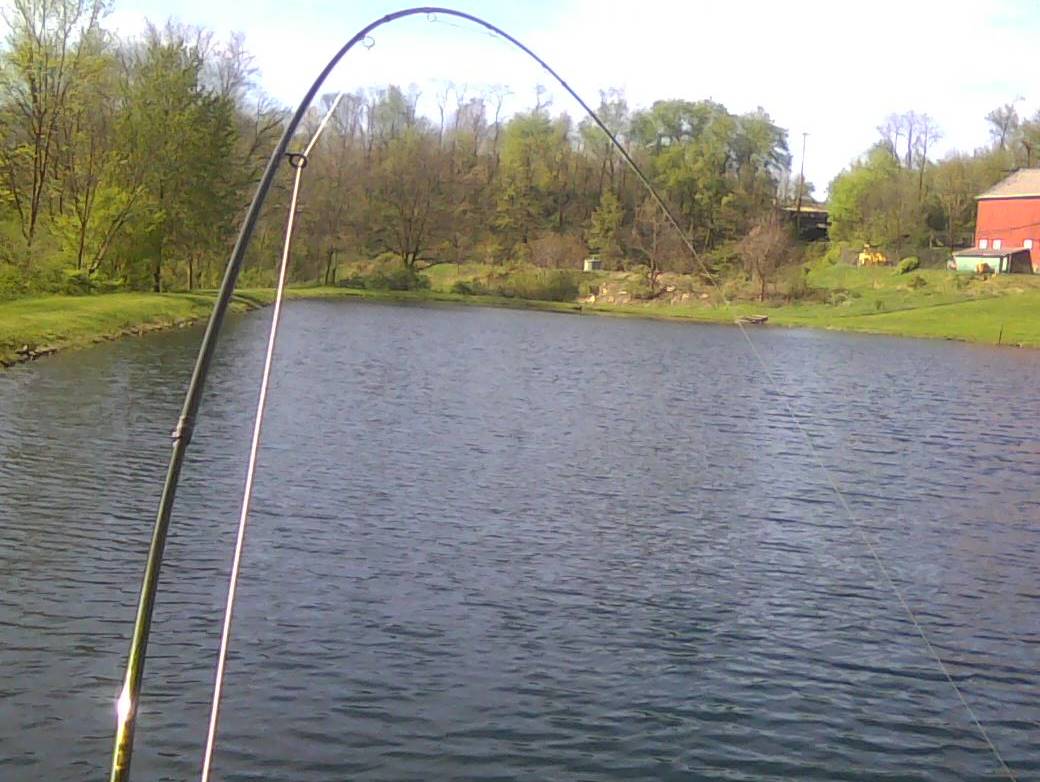
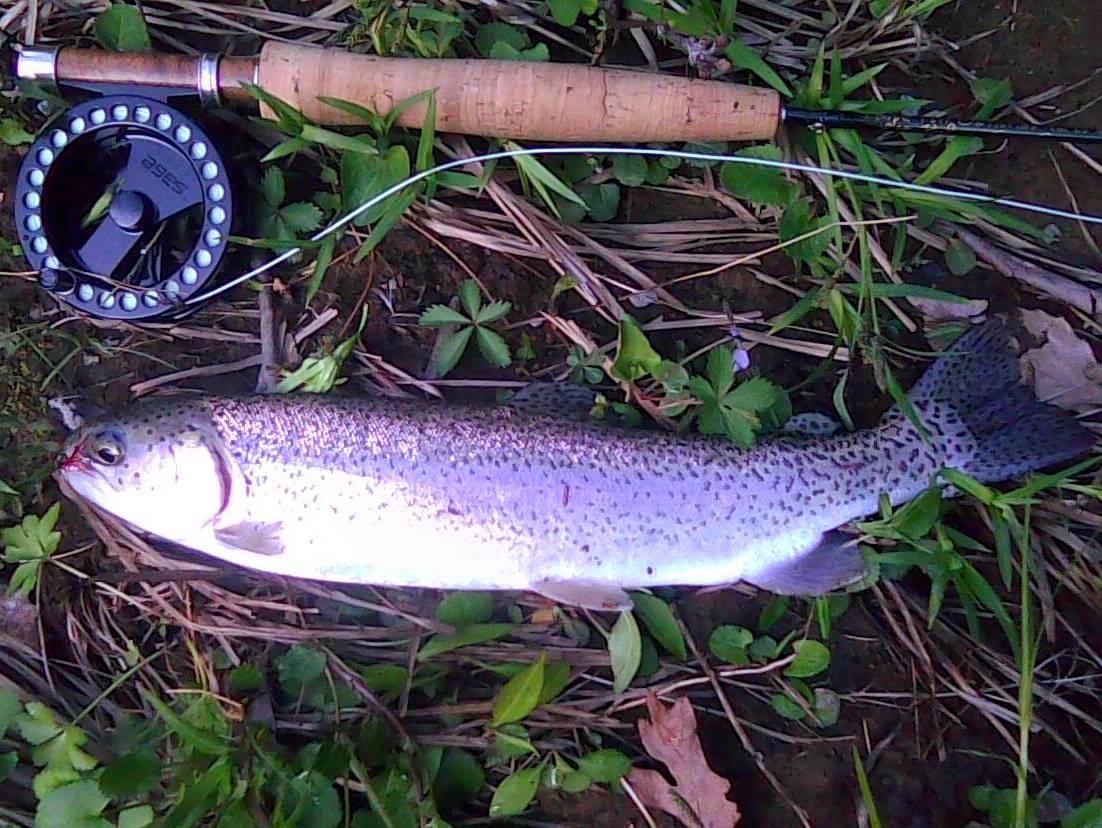
Tuesday, June 8, 2010

Alone on a Freestone

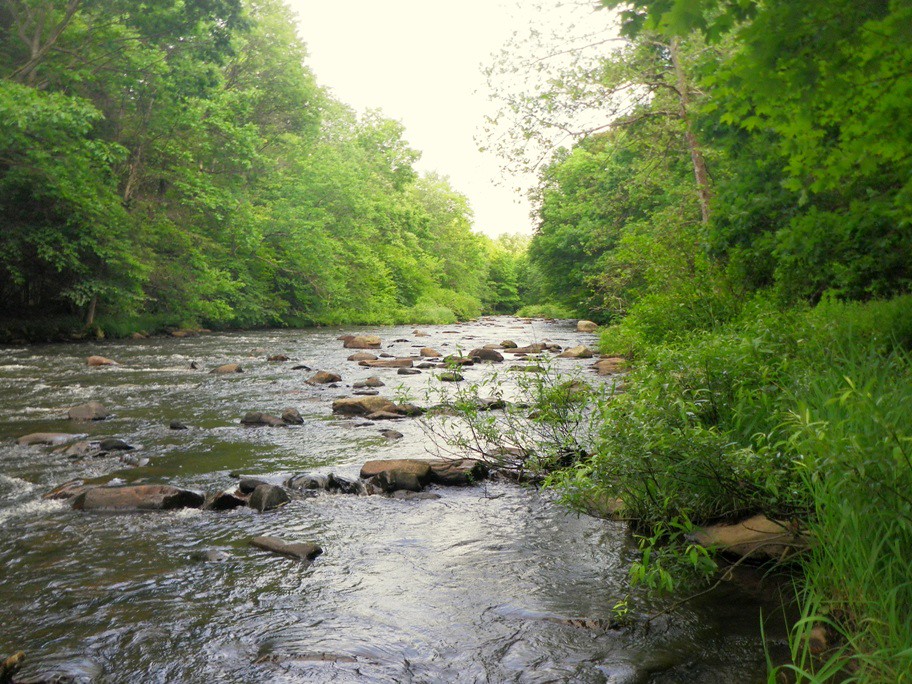
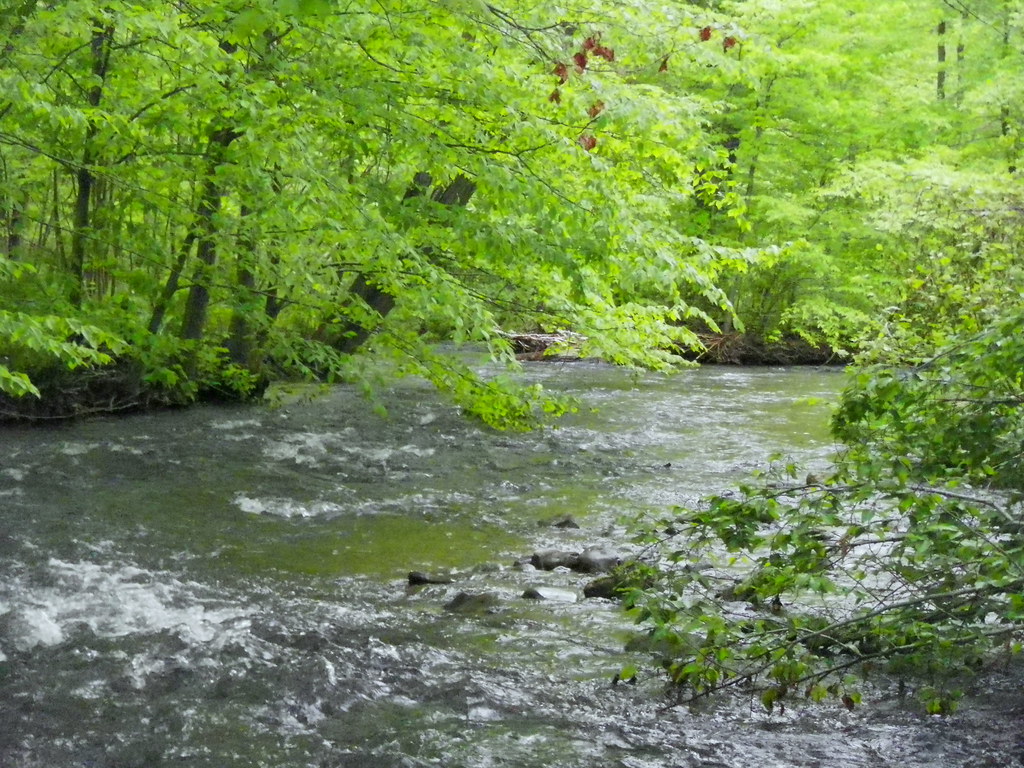
After getting chased from the water Saturday evening (tornado watch), I was determined to get back to the creek as soon as I could.  Lucky for me, that was the very next day.  Sunday I got back out on a local freestone stream known for its rugged terrain and fast water...as well as the stream raised rainbows and browns in its pools...  


Got the car parked and my 7'9" 3wt St. Croix Avid put together, and headed off down the railroad tracks that parallel this part of the creek.  As I walked i was pleased to note that a few of the popular holes close to the road were vacant, which seemed to be a promising indication of an open stream farther down the tracks, away from the road.  About a quarter mile in, I disturbed a small doe that bounded up the hill before I had a chance to get my camera out.

As I walked I recognized many familiar landmarks from my one and only trip to this creek last year...while a few things had changed, this high-gradient stream in southwestern Pennsylvania was still very much as I remembered it.


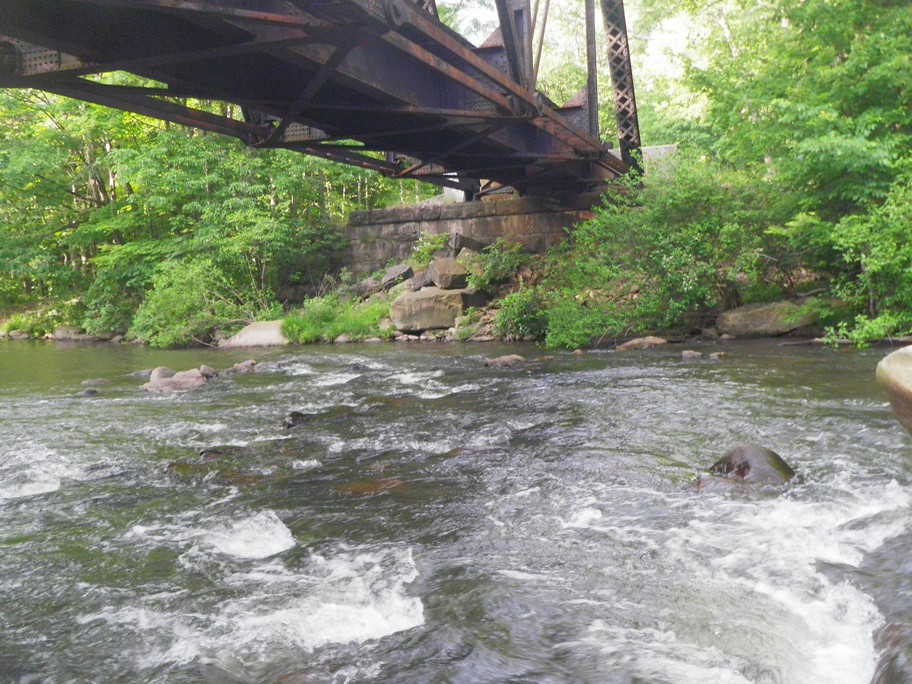
Eventually, about a mile or so down the tracks, the stream came back toward the rails, and passed beneath an old metal bridge.  Almost there...


At this point, I decided to go ahead and throw a few loops.  Crossing the bridge, I swung my green bucktail through the transition water where these rapids emptied into a large, slow pool...a rare feature for this stream. Within a few casts, I brought a small rainbow to hand.  This creek isn't stocked with adult trout like many streams in this part of the state, but rather, a few years ago, it was stocked with fingerling fish, that were then allowed to grow and mature in this natural environment.

From here, I turned away from the tracks, and headed down a dirt road used by ATVs and off-roaders, until I came to a pool I'd fished last summer, and started fishing my way back upstream, swinging wet flies and small hairwing streamers, since the trout didn't seem to be reacting to the sparse hatch of caddis that was coming off.  I was picking up these small rainbows pretty regularly, anywhere from 6 to 10 inches long.

Before long, I found my way back to the tailout riffle of the large pool that started up by the bridge...


Fishing a small pocket of slow water up against the far bank, I caught my nicest fish of the trip, a chunky brown about 15 inches long.  In the fast water with the 3wt it was an exciting battle, and by the time I netted him, the fish was very tired, so rather than keeping him out in the air for a photo op, I got him back in the water as quickly as I could.

As I fished my way back up, past the railroad bridge, I hooked a few more rainbows, eventually stopping to get a drink of water and enjoy the scenery.
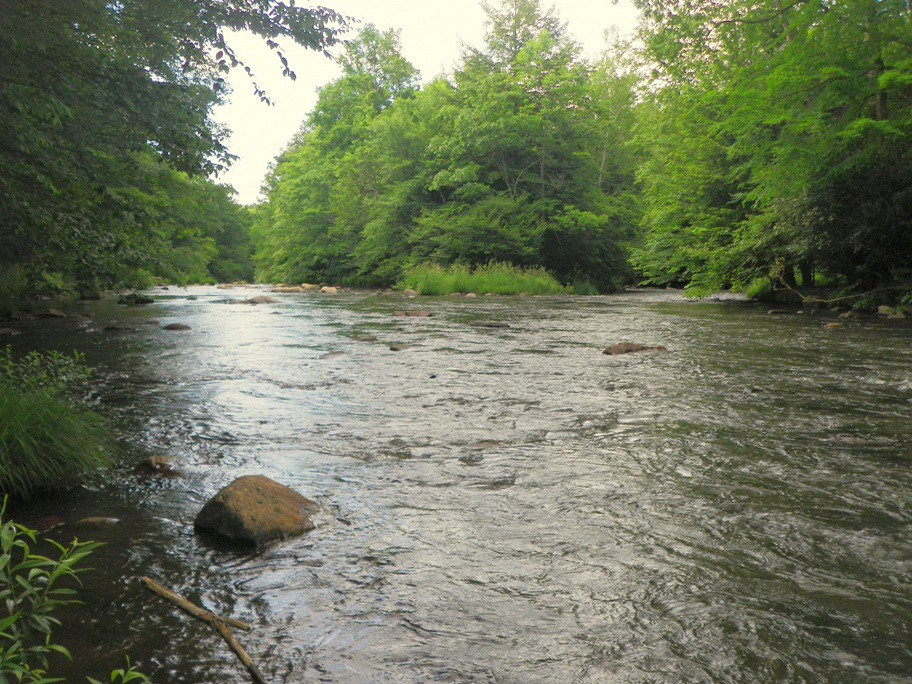


Eventually, my fishing brought me back toward the area where I'd parked, and with no indication of a significant hatch on the way, I decided to make my way up the steep gravel bank with the benefit of sunlight.  There were a handful of light cahills in the air, but similar numbers had been present for over an hour, and I hadn't seen a single rise to anything all day, so I decided to head for home.  All in all a really relaxing day on the water...and I didn't see even one single other person all day.

Wednesday, June 2, 2010

Classic Wet Flies, Part 3

I've been at the vise pretty regularly over the past week or so, and, in addition to restocking the dry flies I've been going through, I've also made time to tie more of these beautiful patterns, most from Bergman's book.

Any deviations from the pattern as listed in Trout are noted.

Esmeralda

Tail: Brown Mallard
Body: Green Floss
Rib: Yellow Floss
Hackle: Brown
Wing: Slate

Fern


Tail: Brown
Body: Pink Floss

Hackle: Brown

Wing: Slate


Flagger


Tag: Gold Flat Tinsel

Body: Yellow Floss


Rib: Gold Oval Tinsel

Hackle: Dun
Wing: Slate

Hardy's Favorite

Tail: Golden Pheasant Tippet


Body: Peacock

Rib: Red Floss

Hackle: Brown
Wing: Mottled Turkey

Note: This patten is not shown in Trout.  According to Bob Petti's Classic Wet Fly page, it's from Helen Shaw's book, which is on my list of must haves.

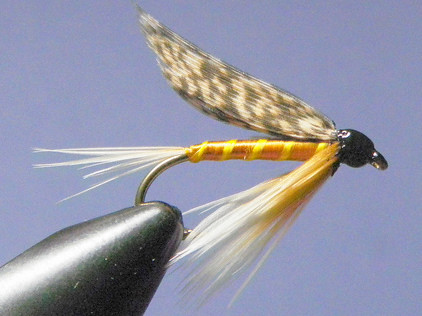
Indian Yellow


Tail: Ginger


Body: Light Brown Floss (Golden Brown shown)

Rib: Yellow Floss
Hackle: Ginger
Wing: Mottled Turkey

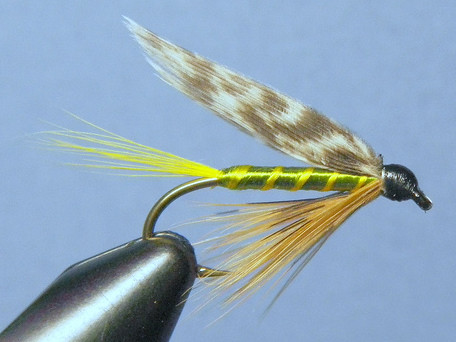
Irish Turkey


Tail: Yellow


Body: Green Floss

Rib: Yellow Floss
Hackle: Brown
Wing: Mottled Turkey


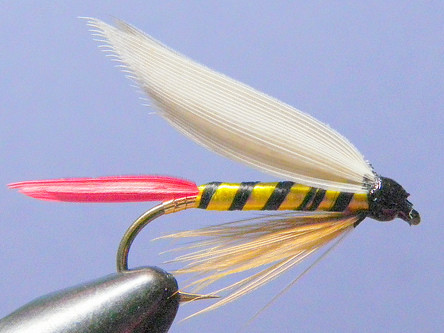
Last Chance


Tail: Scarlet Mallard Quill Slips


Body: Yellow Floss

Rib: Black Floss
Hackle: Brown
Wing: Slate

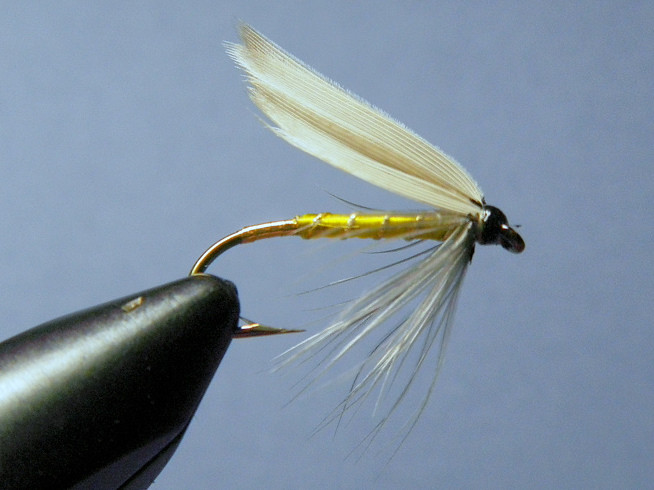
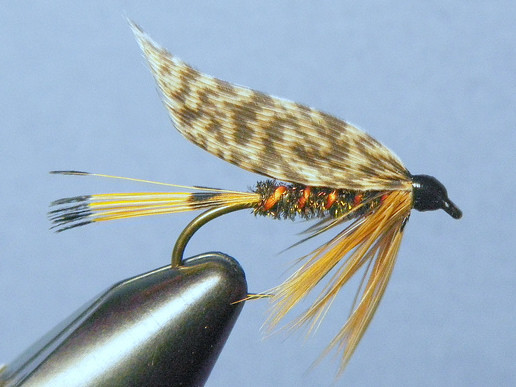
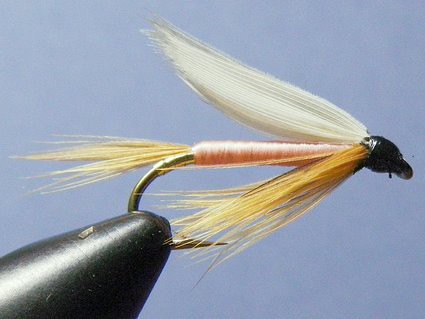
Light Caddis

I tied this one from memory, without referencing the pattern, and there are a few key deviations from the pattern, however, I feel the fly turned out really nice given my skill level, so I'm still putting it up here.  Like the Hardy's favorite, this pattern is also not shown in Bergman's book, but rather a pattern that I saw on Bob Petti's page over at Global Fly Fisher, which he referenced from Helen Shaw's Flies for Fish and Fishermen.

Tag: Silver Flat Tinsel (none shown)


Tail: Golden Pheasant Tippet

Body: Peacock

Rib: Orange Floss
Hackle: Brown
Wing: Slate (Mottled Turkey shown)

I know these flies are far from perfect, but I'm having fun tying them, and my skills are improving, albeit slowly.  From this group, I think the Esmeralda, Irish Turkey, and Light Caddis turned out the best overall.  Over the weekend, the Indian Yellow caught a fish: a stream-raised brown, stocked as a fingerling a few years ago, in a small water filled with similar fish, proving that even somewhat ugly ties will still fool fish.  Aside from my own inexperience, though, I think these, and all the other classic wet patterns are really among the most beautiful flies...not quite so elaborate or gaudy as the full dress atlantic salmon flies, but with a simple, elegant look, and they're practical enough that they will actually get tied on, as opposed to some of the intricate salmon flies, which belong in a shadowbox, and not in the water.

Please, as always, leave comments!  

Thursday, May 27, 2010

Classic Wet Flies, Part 2: Victoria & Victoria Green

Tied a few more winged wets last night and, predictably, I'm more pleased with the results.  Here's a pair of similar flies, the Victoria and the Victoria Green.  These are the first flies I've tied using jungle cock, and I've got to say, I was pleasantly surprised with how easily they were handled.  A week or two ago, I picked up a cheap "fishing grade" jungle cock neck, and was looking for a good opportunity to try using some of these beautiful feathers.  Though the nails pictured were in pretty good condition to begin with, I still "repaired" them, using a tiny amount of Sally Hansen's on the back of the feather, to hold the fibers together.

Both of these flies are tied on Mustad 3906B hooks.  Until I locate a good source of 3399s, these are great practice hooks, with a bit of extra shank length that gives me a little more "wiggle room" in the proportions of these flies.  As far as I know, the only liberties I took in design are the hooks, and opting for dark blue floss on the Victoria (the recipe in Bergman's book only specifies blue).

Anyone have any input on the history of this pattern?  I looked around a bit on the internet for information, but came up empty.

The Victoria

The Victoria Green

Victoria

Hook: Standard Wet Fly Hook size 4-10, (Mustad 3906B, size 8 shown)
Thread: UTC 70, light tan (body), Sheer 14/0, black (head)
Tag: Flat Tinsel, gold or silver (gold shown)
Tail: Golden Pheasant Tippet
Body: Blue Floss (Green Floss for Victoria Green)
Rib: Oval Tinsel, gold or silver (gold shown)
Hackle: Yellow
Wing: Brown Turkey, Jungle Cock

Wednesday, May 26, 2010

Classic Wet Flies, Part 1: Arthur Hoyt

At the beginning of the year, I made a fly fishing new year's resolution to learn to tie and fish classic wet flies.  To that end, I've done alot of reading and practicing, even producing a handful of wets that I was proud to claim as my own ties.  Many, many more didn't turn out so well, and went straight to the fly box.  Over the past month or two, I'd gotten away from the slip wings, and expanded my experience tying hairwing streamers.  While I like both, I definitely wanted to get back to the feather wings, so last night, I flipped through my copy of Trout by Ray Bergman, and chose this pattern, the Arthur Hoyt, as my next attempt, with a few minor variations.  First, and most obvious, is my substitution of  oval tinsel in the place of the yellow floss the recipe calls for.  Second is the use of brown hen as opposed to rooster hackle in the tail.  My next tie will feature the traditional items, i'm just more familiar with the tinsel rib, and had the brown hen right on the desk.

The head is a bit...rough...on this tie.  Several extra coats of Sally Hansen's would have helped, but this one is destined for the fly box, not the shadow box, so one quick coat, and out of the vise.

Anyway, here's the fly:


Arthur Hoyt (as described in Bergman's Trout)


Hook: Mustad 3399, Tiemco 3769 (shown) or equivalent
Thread: UTC 70, light tan (body), Sheer 14/0, black (head)
Tag: Gold Flat Tinsel
Tail: Brown Hackle (Hen shown)
Body: Green Floss
Rib: Yellow Floss (Gold Oval Tinsel shown)
Hackle: Brown Hen
Wing: Mottled Turkey

Saturday, May 22, 2010

Weather Woes

Seems like lately, the weather has been absolutely hating the people of southwestern PA.  This week we had more or less beautiful skies all through the week, only to get rain put into the forecast for Saturday and Sunday, then back to nice weather for Monday and the rest of next week.

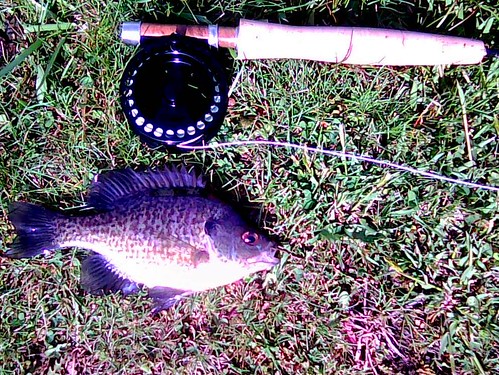
In any event, I've still tried to get out on the water a few evenings, but the high water from the rain combined with windy conditions have made hatches brief, sporadic events that the fish haven't really been reacting to.  The only place I've been fishing dries to great effect is a local pond, with bluegill, with whom the "Adams hatch" has been well received.

Still, it's nice to get out to the trout streams, and I'll probably try to make time for a bit of fishing today before the storm clouds blow in...

Here's a shot I took while fishing earlier in the week, one nice thing about all the rain is how green the forests have become...

Wednesday, May 12, 2010

A Windy Day on New Water

Venturing out to a new stream alone, and learning to fish it on the fly is something I always love to do when I can.  Overcoming a few challenges and making a great day out of the experience usually makes for one of the more memorable days of the season.

Saturday I traveled a bit farther than I normally do, and fished a stream I'd never been to before.  It was really nice to get a change of scenery and the fish didn't disappoint either.  I wanted to use the 1wt, but when I arrived and opened the door of my car, the wind nearly blew it shut again, so ultralight was out of the question.  Instead, I strung up my 4wt and planned on fishing wet flies and streamers unless I saw risers or a significant hatch (unlikely on such a windy day).

With a black bugger on the line, I made my way to the water and made a few test casts, slowly getting accustomed to the wind.  The stream was clear despite the overnight storm that had blown through the area, but also running faster than I'm generally used to.  Still, the fast water was separated by deep pools that looked like good holding water.


I made my way downstream without much interest in my buggers, fishing a few holes very similar to this.  Eventually, I decided to go with a leaner, sparser presentation in the clear water.  So I tied on a bucktail streamer and continued to fish.

Eventually, I hooked a small brookie in a faster run on the outside of a bend in the stream on this fly.  I did note that the fly seemed to be riding just a few inches under the surface, so I added a bit of weight up above the streamer about 18" or so.

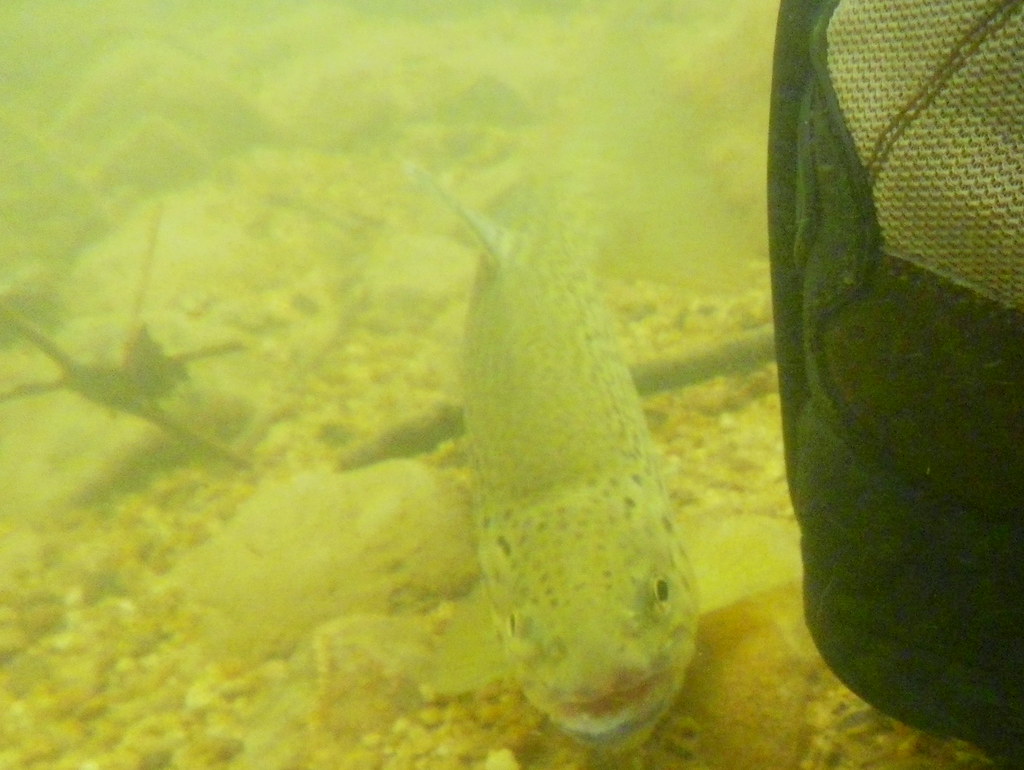
Fishing like this, changing flies occasionally, I made my way down stream.  As I did, I picked up a few fish here and there, and eventually, one of the fish, after release, tucked into the slow current behind my boot, of all places.  Getting my camera out and adjusted, I snapped a few quick underwater shots of the recent catch.

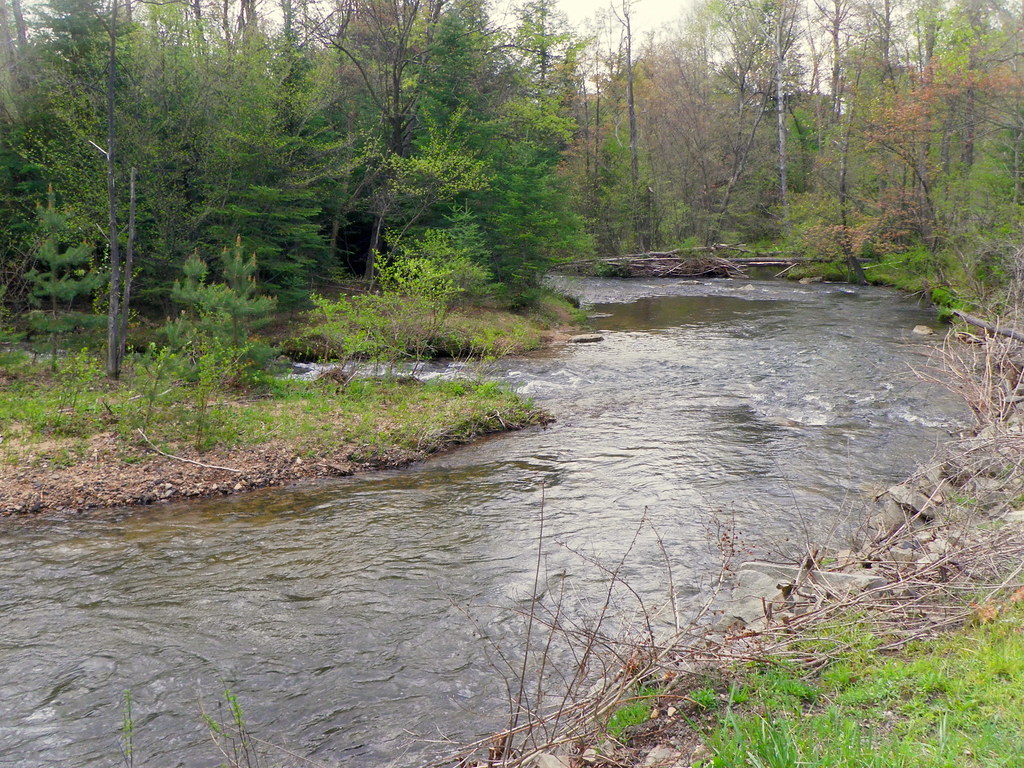
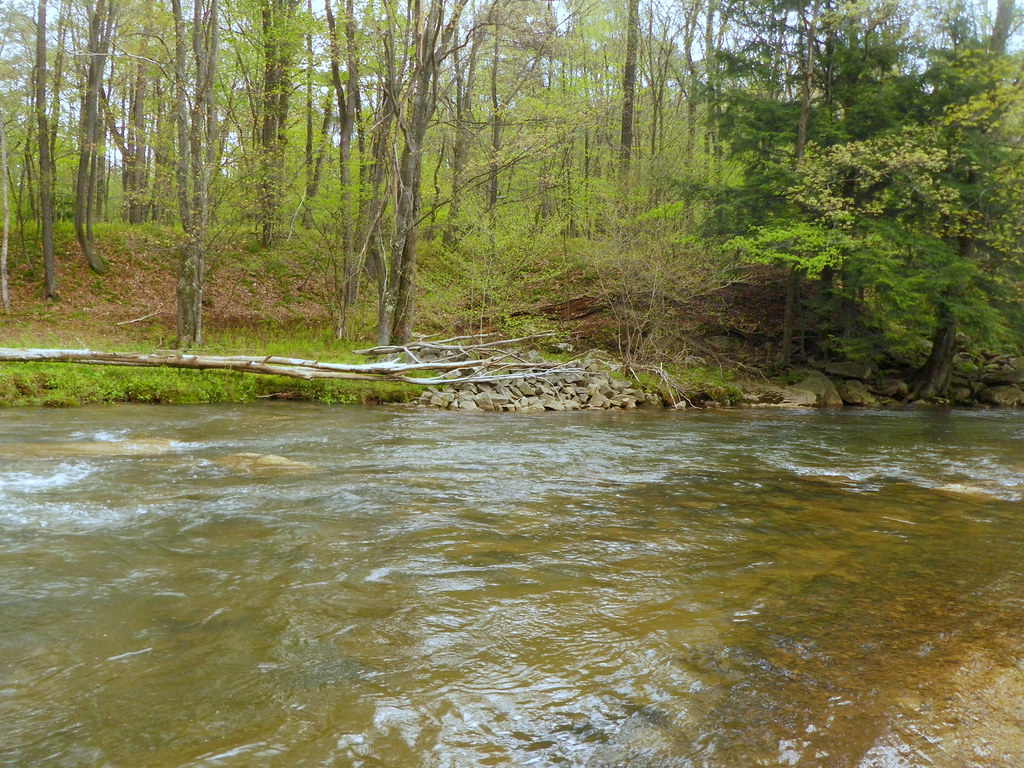
Here's a few more pics I took along the way:


Wednesday, May 5, 2010

Introducing the 1wt

Hey all, I know it's been a while since the last post, but there really hasn't been a whole lot of fishing-related news for me to post.  With the warming weather, hatching bugs, and new toys, though, I've got lots to write about again!

The biggest news is that about a week and a half ago, I became the proud new owner of a new ultralight fly rod.

Back in early March (when we were still buried under an unhealthy dose of snow), I started talking to friend and rod builder Skip Hughes of Mile Creek Custom Rods to discuss particulars of having a custom fly rod built.  This, on the heels of barely missing an opportunity at buying a used 1wt online.  As soon as I made the decision to go for it, I checked back, and the thing had sold.

Skip, for his part, did a great job of explaining my options, popular choices, and things to keep in mind while shopping around for components.  He was also able to answer every question I had about rod building, and ultralight fly rods.  Eventually, I decided to pull the trigger, and put together a list of preferred components and sent it off to Skip.  Within a week or so, he'd ordered and received most of the components and could begin building.

He kept me posted every step of the way, and made sure to get my preference on any of the finer points that we hadn't discussed.  He also created a photo album on Facebook on the Mile Creek Custom Rods page, with shots of guides, grips, reel seats, and the rod itself, as the build progressed.

Eventually, the time came, and Skip let me know that the final coat of finish was drying on the rod, and it'd be ready to fish soon.  As luck would have it, a friend of mine was playing a gig in Erie that weekend, so rather than having to wait until mid-May (when I knew I'd be fishing with Skip at Oil Creek), or having it mailed, I decided to make a trip north.

Upon getting to finally check out the rod, i found it to be everything I'd hoped for.  Quick, responsive, sensitive, and light as a feather.  The components that I'd decided upon (with Skip's help and advice) look great together, and are functional and appealing, without looking gaudy.  Skip's workmanship is top-notch as well, with flawless finish, tight, even thread work, neat, clean assembly, and attention to detail.

The Details:

Blank: TFO Finesse 6' 9" 1 weight

This is a beautiful green blank in a shade somewhere between the olive green of the Sage TCX and the more emerald green of the Redington CPS.  It comes from the factory with the TFO logo and the blank particulars (length and weight) already printed on it, in gold.  Action-wise, I'd say it's just a bit softer than a St. Croix Avid (SC III).  It's very precise but whether because of the short length, light weight, or action, it isn't terribly forgiving for a moderate-fast rod.  That said, as long as you pay attention to what you're doing, anyone proficient in fly casting should have no problems.  As is to be expected with a moderate-fast 1wt, it struggles in a stiff wind, but surprisingly, it casts pretty well even in a slight breeze.

Guides: REC Recoil single foot guides

Skip reccomended these guides strongly and I'm glad he did.  These guides are incredibly light, look great in a minimalist way, and are unbeatable in terms of durability.  They're made of a nickel-titanium alloy, so there's no need for any kind of plating or coating that might chip off later.  Also, as a unique property of this alloy, these eyes are flexible, but have a "memory" that immediately brings them back to their original shape without any deformation whatsoever.  You can literally push these guides down flat against the blank, and when you let go, they bounce back, unharmed.  Try doing that with your stainless steel guides.  (Actually don't try that.  They will break your rod.)

For the stripping guide, I went with a tiny, single foot, titanium Fuji guide with a silicon carbide (SiC) insert.  The SiC guides are unbeatable in their smoothness and abrasion resistance, and the titanium frame and single-foot configuration ensures that it's as light as possible.

Grip: Half-wells cork grip

Nothing too outlandish here.  I've seen some of Skip's other work, and he's extremely talented.  Capable of making some really nice looking grips, he had plenty to offer, but for this rod, I wanted to go fairly simple in terms of looks.  With the low-key guides and wraps I'd decided on, I felt that straight, good-quality cork was the only way to go.  Skip chose some great cork rings and turned this grip himself, just for this rod.  It is comfortable solid, and transmits the slightest tick in the rod directly to my hand.

Reel Seat: REC CRNS Downlocking Cap & Ring

If any one part of this rod was a "splurge" in the budget, this was it.  I figure that, of all the parts of the rod, this is the part I'll be looking at the most, so why not make it look great.  To that end, I chose this reel seat, from REC's Master Series.  It's a nickel-silver (not plated, made from it) cap & ring style downlocking reel seat.  I chose a downlocking to try to avoid having a small portion of the butt protruding out to get in the way and so far it's been great in that regard.  I chose the cap & ring (with Skip's advice) for a more elegant, classic look, while ensuring a strong, consistent attachment point.  I've been really impressed by this style.  It has held my reel without budging, every time, but is so simple to operate and lets you put on or remove the reel in no time at all.  REC's rope knurl adds a nice touch, especially paired with the matching winding check at the top of the grip.

For this reel seat I chose a stabilized maple burl insert that is all kinds of beautiful.  While I was expecting a lighter color, the wood is actually nicer than I expected and I like it more every time i look at it.  It is cut specifically for the smaller reel seat, with a recessed portion along the bottom to keep the reel from working its way up the side of the reel seat (I really dont think it would move at all anyway).  The color is probably best described as a butterscotch kind of brown, with slightly darker, distinctive burl that makes for a beautiful insert, especially when coupled with the bright silver of the metal hardware, including the nickel-silver strap & ring style hook keeper.

Wraps: Olive (no Color-Preserver) with Silver Metallic Trim

This may seem like a fairly minor point...and in all honesty, it is largely a simple cosmetic preference, but this is also one area that you can't just order from a website.  A real, live person has to sit down and apply a steady hand and a well-honed technique to produce even, smooth wraps.  In this case, that real, live person was Skip Hughes, and those smooth, even wraps are on my 1wt, looking great.  The olive thread, without the color preserver, turned to a deep, translucent green and the silver metallic trim, present only as a single turn on the guide wraps and double turn on the ferrules, adds just the right amount of accent to really make the rod "pop" while still looking elegant rather than tacky.  Really, a great looking setup.

To this rod, I've completed the setup by pairing it with a Sage 3100 reel, which is simple, durable, and provides a very large arbor (to reduce line coiling memory and make for a faster pickup of line), as well as being among the lightest reels on the market.

I've spooled the 3100 with a Sage Quiet Double Taper line in DT1F.

So far, I've caught somewhere between 25-35 fish, among 4 species (bluegill, largemouth, rainbow trout, and one very small, very energetic creek chub), and this rod has been great every step of the way.  Depending on where the weekend takes me, I hope to add brookies to that list as well.

For now, though, here's a few pictures:


That's it for now!  Fly tutorials, more pics, and some randomness in store for the near future!

Twitter Delicious Facebook Digg Stumbleupon Favorites More

 
Top Web Hosting | manhattan lasik | websites for accountants